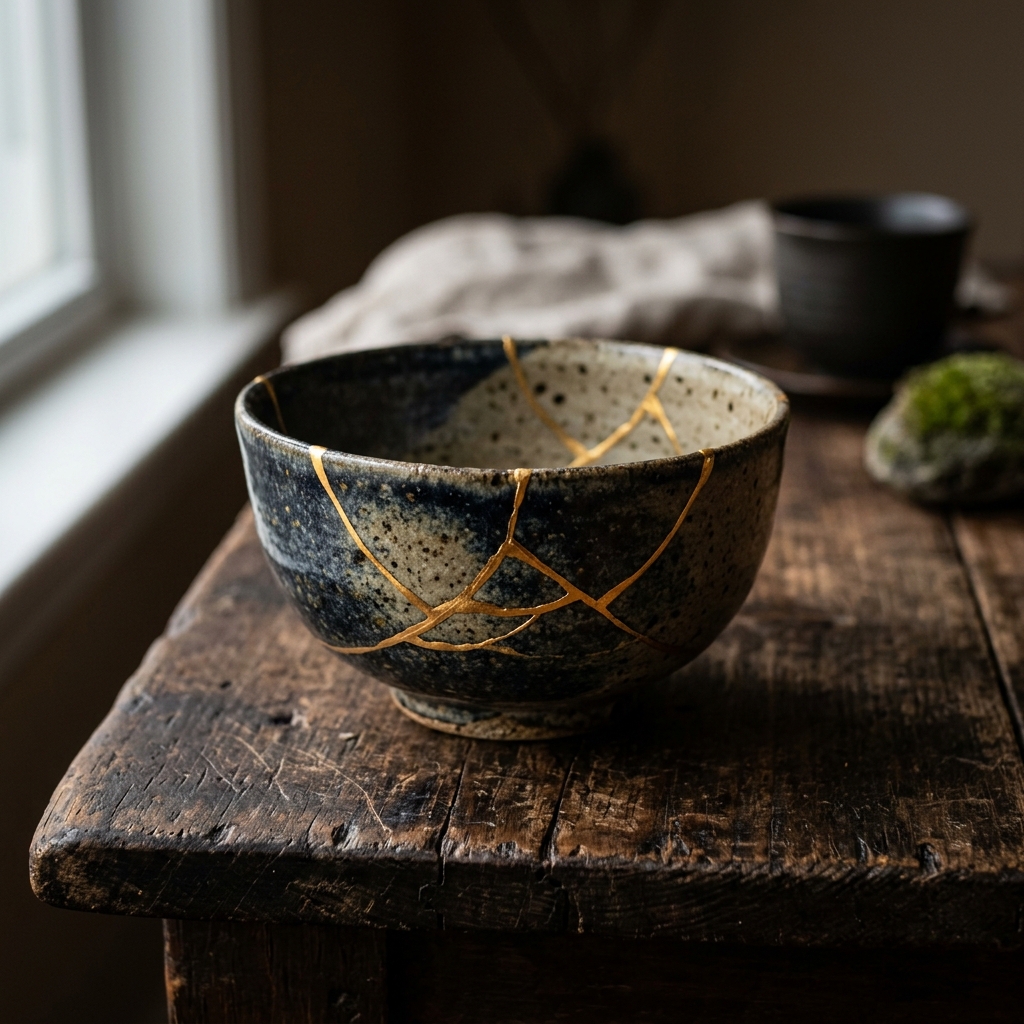
A sudden, sharp clatter on the kitchen tile, followed by a momentary silence, and then the inevitable heavy sigh. We look down to find a beloved ceramic cup or a cherished plate shattered into a dozen pieces. In our modern, convenience-driven world, the immediate impulse is clear: gather the fragments, throw them into the trash bin, and browse online for a seamless replacement. We are conditioned to discard the broken, to hide the flawed, and to seek solace in the brand new.
Yet, deep within the heart of traditional Japanese culture, there lies a drastically different response to this everyday tragedy. It is the centuries-old art of Kintsugi (literally “golden joinery”). Instead of tossing the fractured clay aside, Kintsugi practitioners gather the broken pieces and painstakingly reunite them using natural Urushi lacquer dusted with shimmering gold powder. The result is not a hidden repair, but a striking celebration of the break itself. The golden scars do not mask the trauma; they illuminate it, transforming a ruined object into a singular work of art.
In this simple act of golden repair, Kintsugi offers us a profound philosophy—a gentle, poetic guide for navigating both the physical clutter of our consumerist world and the emotional landscape of our fractured lives.
The Philosophy of the Golden Joinery
Finding Beauty in the Imperfect (Wabi-Sabi)
To truly appreciate Kintsugi, one must understand that it is far more than a clever craft; it is a physical manifestation of Wabi-Sabi—the Zen-inspired aesthetic that finds beauty in the imperfect, the impermanent, and the incomplete.
A History of Celebrating Scars
Historically, the practice of repairing damaged ceramics is found across many ancient civilizations. In China, for instance, broken porcelain was often repaired using technical methods like kasugai (metal staples) to clamp the pieces back together, striving to restore utility while keeping the repair as unobtrusive as possible. Western traditions historically favored seamless adhesives, attempting to trick the eye into believing the object had never been broken.
Kintsugi, which flourished during the Muromachi period (14th–16th century) alongside the development of the Japanese tea ceremony (Cha-no-yu), chose a radically different path. Rather than treating a crack as a defect to be concealed, tea masters and artisans viewed the break as an integral chapter of the object’s history. They reasoned that a bowl that had suffered damage and been lovingly restored possessed more character, depth, and soul than a pristine, factory-perfect vessel. By filling the fractures with precious gold through this traditional craft, Kintsugi elevates the scar to a focal point of beauty, proving that history and vulnerability can be a source of profound aesthetic value.
Kintsugi as a Metaphor for Emotional Healing
The Trap of Modern Perfectionism
In a modern society that demands constant perfection, productivity, and a polished digital facade, we often apply a harsh, zero-tolerance policy to our own lives. We hide our emotional struggles, cover up our failures, and view our emotional wounds—whether from heartbreak, grief, or personal setbacks—as shameful flaws that decrease our worth.
Embracing Our Own Golden Seams
Here, Kintsugi serves as a powerful metaphor for psychological resilience. The golden bowl reminds us that our personal history, with all its fractures and falls, does not diminish our value. In fact, it is the process of putting ourselves back together that refines us. Just as the Kintsugi vessel becomes stronger at its seams than it was before the break, our struggles can cultivate an inner strength and empathy that make us more resilient.
Our scars, both visible and invisible, are not things to be hidden. They are our personal “golden seams”—testimonies of survival, growth, and transformation. To embrace the spirit of Kintsugi in our emotional lives is to practice self-compassion, accepting that we can be beautifully broken and, ultimately, beautifully rebuilt.
The Slow Meditation of Repair
A Rebellion Against Instant Gratification
In our fast-paced digital era, we are addicted to instant gratification. We want quick fixes, immediate answers, and effortless solutions. The process of Kintsugi, however, is a stubborn rebellion against haste.
Urushi and the Art of Patience
The traditional Kintsugi process cannot be rushed. It relies on Urushi, a natural sap harvested from the lacquer tree. Unlike synthetic glues that dry in seconds, Urushi cures slowly, requiring specific conditions of high humidity and warmth over days, weeks, or even months. The process is a slow, rhythmic dance: cleaning the fragments, mixing the lacquer with clay or flour to create a bonding paste, carefully aligning the pieces, waiting for it to dry, scraping away the excess, applying fine layers of colored lacquer, and finally, dusting the wet seams with gold powder (a technique deeply rooted in the spirit of Makie).
This slow, meticulous craftsmanship transforms repair into a form of active meditation. It requires the artisan to breathe slowly, steady their hands, and focus entirely on the present moment. In the quiet space of the workshop, the mind settles. As you mend the vessel, you are also quietly mending your relationship with time, learning the value of patience, presence, and deliberate care. It is a reminder that healing—whether of clay or of the human heart—is a journey that deserves time.
Right to Repair: A Sustainable Choice for the Modern Consumer
Countering the “Take-Make-Waste” Culture
Beyond its emotional and philosophical depth, Kintsugi carries a vital message for the health of our planet. We currently live in a disposable culture dominated by planned obsolescence and mindless consumption. When an appliance breaks, we throw it away. When a garment tears, we discard it. This “take-make-waste” lifestyle is rapidly depleting the Earth’s resources and filling our landfills with toxic waste.
The Ethos of Mottainai
Kintsugi is a beautiful antidote to this ecological crisis. It is the ultimate expression of Mottainai—a Japanese term that conveys a deep sense of regret over waste, combined with feelings of gratitude and respect for resources. Mottainai teaches us to see the inherent value in the physical objects that support our daily lives and to honor the materials and labor that went into making them.
By choosing to repair rather than replace, we align ourselves with the global “Right to Repair” movement, which advocates for consumers’ ability to fix their own electronics, appliances, and belongings. Kintsugi elevates this movement from a political or economic necessity into an aesthetic and ethical joy. It shows us that sustainable living does not mean living in deprivation; rather, it invites us to surround ourselves with objects that have stories, character, and a shared history with us.
Conclusion: We Are All Beautifully Broken
The next time a piece of ceramic slips from your fingers, or the next time you feel overwhelmed by the cracks in your own life, pause. Remember the lesson of the golden joinery.
We do not need to lead flawless lives to be worthy of love, beauty, or respect. The pristine, untouched surface is not the only standard of value. In the light of Kintsugi, our breaks are not the end of the story; they are simply the beginning of a more beautiful, resilient, and authentic chapter.
Let us embrace our history. Let us honor our repairs. For in the end, we are all like the Kintsugi bowl—beautifully broken, lovingly mended, and shining all the brighter for our golden scars.

Comments