Introduction
In our quest for the perfect home, we often find ourselves swept away by the glossy images of modern interior design platforms. We are presented with flawless, sterile rooms—spaces dominated by absolute symmetry, sharp white surfaces, and hiding any trace of human presence. But in this pursuit of pristine order, something vital is lost. These cold, immaculate spaces can feel less like homes and more like showrooms, devoid of warmth, history, and life. This rigid approach to styling—what many call sterile minimalism—leaves little room for the messy, beautiful reality of daily living.
It is against this backdrop of artificial perfection that the ancient Japanese aesthetic of Wabi-Sabi speaks to us with profound gentleness. Rooted in Zen Buddhism, Wabi-Sabi invites us to step off the treadmill of constant improvement and find beauty in things as they are. It is an aesthetic of warmth, soulfulness, and organic texture. Rather than demanding that we polish away the marks of time and usage, it whispers that these very imperfections are what make a space feel like home. By welcoming Wabi-Sabi into our living spaces, we can transform our houses from quiet galleries of static objects into nurturing sanctuaries that breathe alongside us.
What is Wabi-Sabi? Finding Soul in the Askew
To understand Wabi-Sabi is to look beyond the surface of interior design trends. It is not merely a style; it is a philosophy of life, a way of seeing the world with a tender, accepting eye. The term itself is comprised of two distinct concepts: Wabi represents the quiet elegance of simplicity, the beauty found in solitude, and the rustic charm of natural things; Sabi refers to the passage of time, the gentle decay, and the unique character that objects acquire as they age.
Together, Wabi-Sabi teaches us to appreciate the transience of existence and the inherent beauty of the incomplete, the impermanent, and the imperfect. In a world obsessed with youth and flawless mass production, Wabi-Sabi finds soul in the askew—in the cracked glaze of a beloved tea bowl, the uneven weave of handspun linen, or the worn wood of an heirloom dining table. It encourages us to cultivate a sense of gratitude for the natural cycle of growth and decay, urging us to make peace with the inevitable scratches, dents, and weathering that life leaves behind.
Soft Minimalism: Moving Beyond Cold Interiors
In recent years, the design world has witnessed a significant shift away from the icy, clinical interiors that characterized early 20th-century minimalism. While the desire to declutter and simplify remains strong, we are realizing that human beings need more than straight lines and monochromatic color schemes to feel emotionally grounded. This has led to the rise of “soft minimalism” and the global popularity of Japandi—a beautiful fusion of Japanese design principles and Scandinavian functionality.
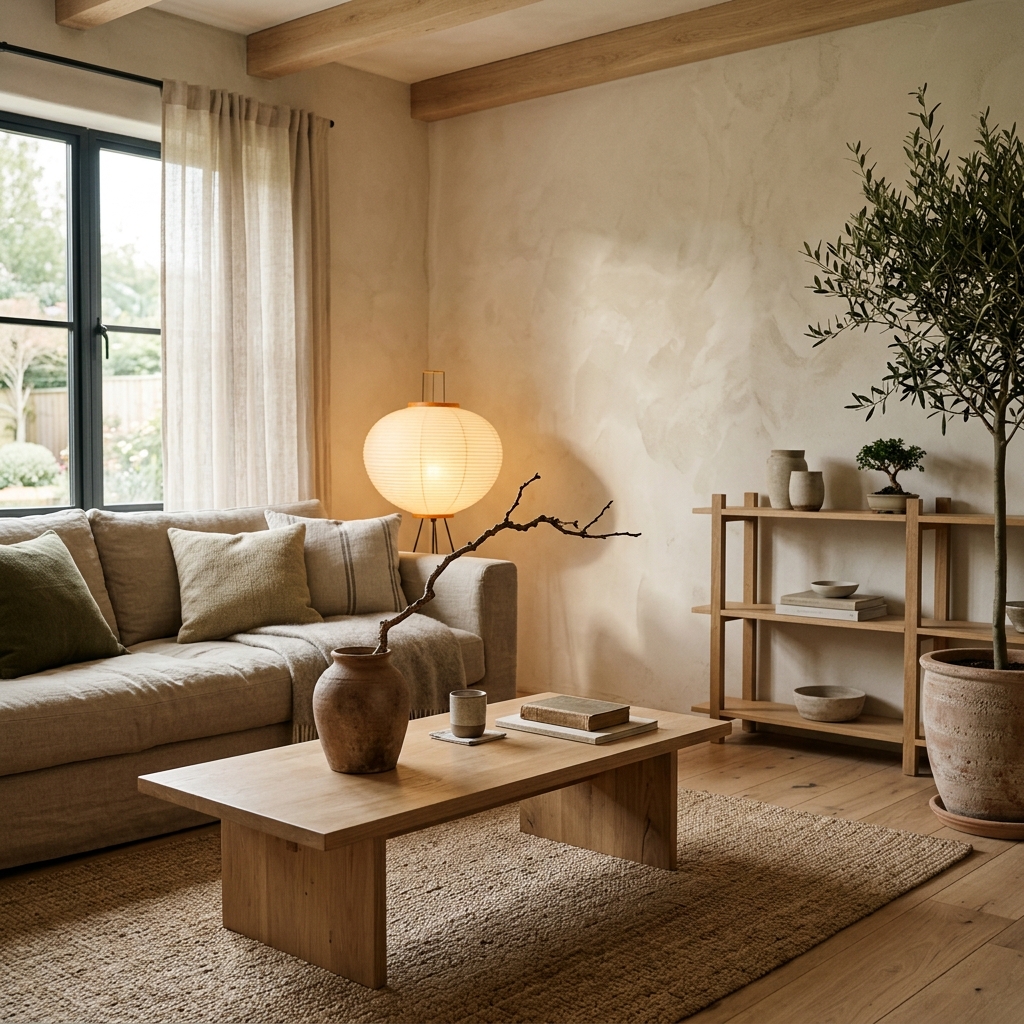
Unlike its colder predecessor, soft minimalism focuses on emotional comfort and sensory warmth. It preserves the clean lines and clutter-free ethos of classic minimalism but infuses the space with tactile textures, organic curves, and earthy tones. It replaces synthetic plastics and stainless steel with warm timbers, woven grasses, and unpolished stone. By bridging the gap between minimalism and comfort, soft minimalism creates rooms that feel spacious yet incredibly cozy, modern yet deeply rooted in the natural world. It is about creating a visual and emotional sigh of relief when you cross the threshold of your home.
5 Steps to Design Your Wabi-Sabi Sanctuary
Creating a Wabi-Sabi sanctuary does not require a complete renovation or a large budget. In fact, it is often about doing less and appreciating what you already have. Here are five practical, mindful steps to infuse your living space with the soulful spirit of Wabi-Sabi:
1. Choose Raw and Natural Materials
The foundation of a Wabi-Sabi home lies in its connection to the earth. Replace synthetic, mass-produced materials with raw, natural elements that retain their organic textures. Look for solid wood showing its natural grain, unglazed clay pottery, rough-hewn stone, and pure textiles like linen, wool, and cotton. These materials do not hide their origins; they tell a story of the soil, the forest, and the hands that shaped them. They invite touch, bringing a grounding tactile experience to your everyday rituals.
2. Welcome the Patina of Time
In our modern culture, we are often quick to replace things the moment they show signs of wear. Wabi-Sabi asks us to do the opposite: to cherish the patina of time. A copper kettle that has darkened with use, a wooden table displaying faint water rings from family gatherings, or brass fixtures that have lost their shiny gleam all possess a quiet dignity. These marks are not flaws to be hidden; they are the physical records of a life well-lived. Let your home age gracefully alongside you, finding joy in the history etched into your belongings.
3. Celebrate Asymmetry and Imperfection
Perfect symmetry can feel static and unnatural because nature itself is rarely symmetrical. Bring life into your rooms by embracing asymmetry and organic shapes. Display a single, beautifully crooked branch in a vase instead of a perfectly balanced bouquet. Choose handmade ceramics—like a rustic Chawan (tea bowl) or an unevenly glazed plate—where the thumbprints of the potter are still visible in the clay. These subtle irregularities create visual interest and remind us of the human touch in a digitized world.
4. Light with Softness and Depth
Light has a profound impact on our mood and how we perceive space. Step away from harsh, overhead fluorescent lights that expose every corner. Instead, design with softness and depth by utilizing indirect lighting and natural shadows. Emulate the concept of Yohaku—intentional empty space—through light. Use paper lamps, candles, and low-wattage warm bulbs to create pockets of light and shadow. Allow natural daylight to filter through sheer linen curtains, casting soft, shifting shadows across the floor. In the interplay of light and dark, your home gains a sense of mystery and stillness.
5. Clear the Noise, Keep the Soul
A Wabi-Sabi sanctuary is not cluttered, but it is not empty either. It is a space that has been mindfully curated to remove visual noise while preserving the objects that carry genuine meaning. Go through your belongings and gently remove items that feel soulless or serve no purpose. However, do not discard the quirky, sentimental objects that bring you joy simply because they do not fit a specific design trend. A small pebble collected from a memorable beach, a hand-drawn picture by a child, or a worn book passed down through generations are the true anchors of a home’s soul.
Conclusion: An Invitation to Breathe
At its heart, Wabi-Sabi is not a set of rigid design rules, but a gentle invitation to breathe. It reminds us that our homes are not permanent monuments to perfection, but fluid, living spaces meant to shelter our vulnerabilities, nurture our dreams, and witness our daily lives.
By embracing the imperfect home, we learn to release the exhausting pressure of perfectionism—both in our surroundings and in ourselves. When we allow our walls to show their texture, our furniture to show its age, and our rooms to reflect our authentic daily rhythms, we create more than just a beautiful interior. We create a true sanctuary: a warm, forgiving space where we can fully slow down, let go of the outside world, and simply be.

Comments